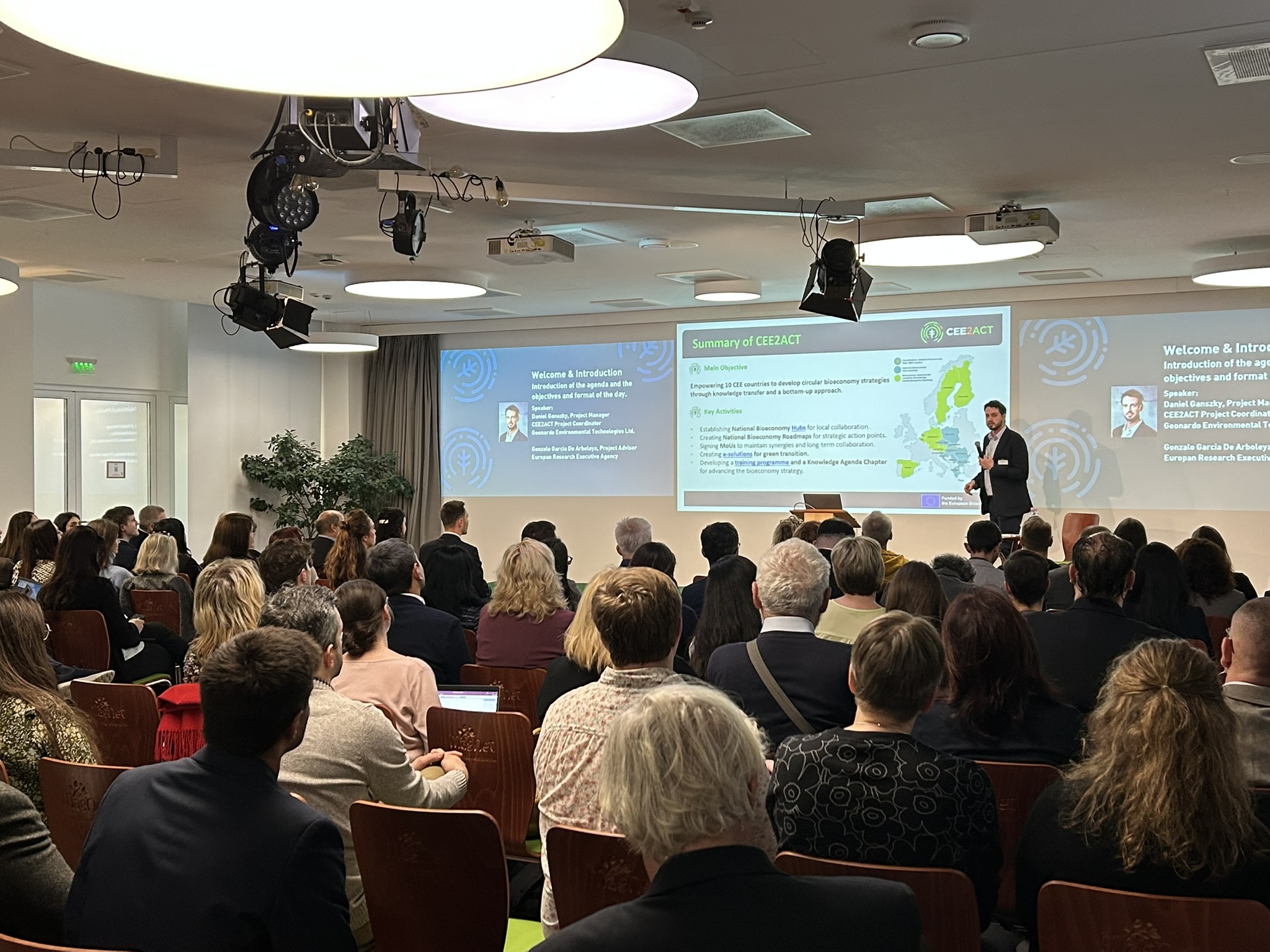
“The Future of the Bioeconomy in Central and Eastern Europe” conference was held on 4 December 2025 in Budapest, at the MagNet Community House. Organised by Geonardo Ltd., the event served as the final conference of the CEE2ACT project, bringing together policymakers, researchers, and industry representatives to discuss pathways towards a sustainable bioeconomy in the region.
The conference was opened by Dániel Ganszky, CEE2ACT Project Coordinator, followed by high-level policy presentations focusing on European bioeconomy frameworks and regional implementation opportunities.
Key EU and national strategic directions were presented by May Hobeika (DG AGRI) and Marek Veselský (DG RTD) from the European Commission. Their presentations highlighted policy priorities related to the new EU Bioeconomy Strategy, the development of a biomass-based circular economy, and the transformation of food systems.
The importance of macro-regional cooperation was addressed by Barna Kovács, Secretary General of the BIOEAST Initiative, who underlined the strategic role of BIOEAST and the need for coordinated Central and Eastern European action in the bioeconomy field.
The national perspective was presented by Ákos Kristóf, Head of the Department of Agricultural Knowledge and Innovation at the Hungarian Ministry of Agriculture, who outlined Hungary’s bioeconomy direction and emphasised the importance of sustainable biomass utilisation.
From strategy to implementation
The afternoon sessions focused on practical implementation and synergies. Experts discussed support mechanisms and financing opportunities for SMEs, while a dedicated panel examined the effectiveness of bottom-up initiatives, highlighting how local actions can inform policymaking.
Several related projects were showcased during the Synergy Spotlight sessions, including BOOST4BIOEAST, BIOECO-UP, BIOLOC, MarginUp!, BBioNets, BIO-INSPIRE, ToBeReal, Greet CE, and BEAMING projects, providing valuable insights and lessons learned.
A major highlight of the conference was the presentation of the National Bioeconomy Roadmaps developed by the 10 Central and Eastern European countries participating in the CEE2ACT project. These were introduced through an interactive Guided Poster Walkabout.
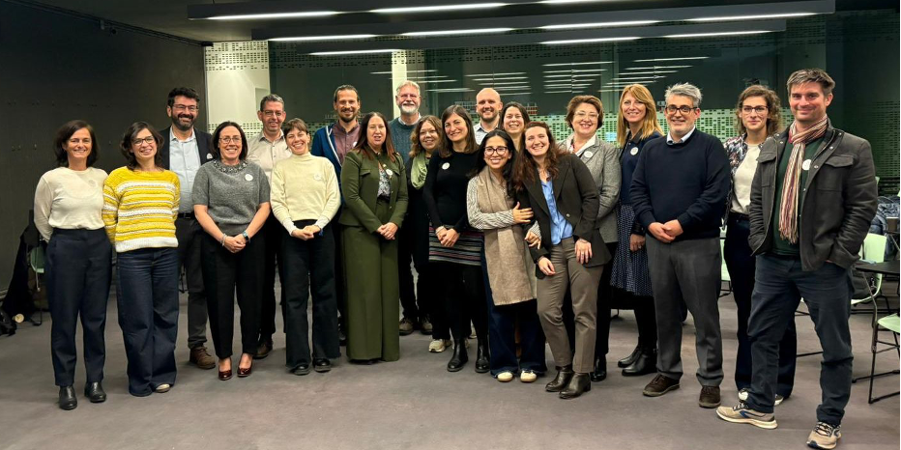
The event concluded with the ceremonial signing of a Memorandum of Understanding (MoU), establishing the basis for continued cooperation and coordinated action beyond the project’s lifetime. For the Hungarian Bioeconomy Forum, this represents a significant milestone, confirming its commitment to ongoing regional collaboration and knowledge exchange.
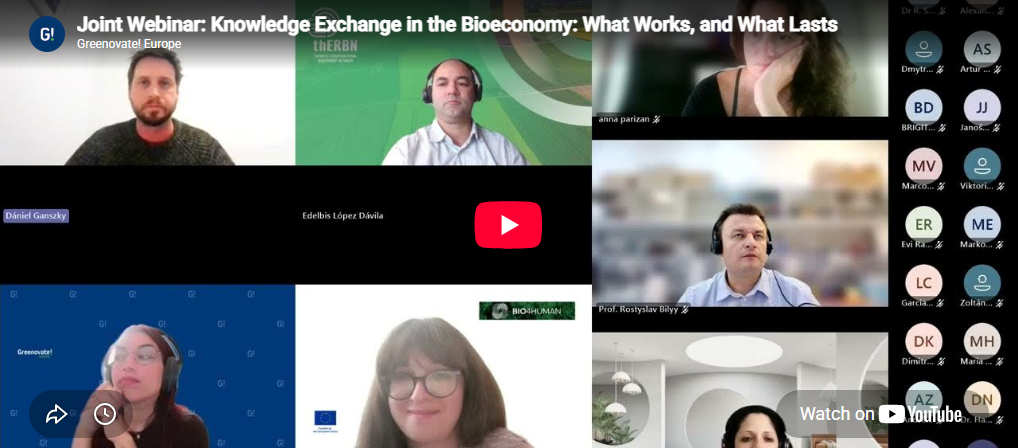
The full conference recording and presentation materials are available online.
Watch the conference
recording:
The Future
of the Bioeconomy in Central and Eastern Europe