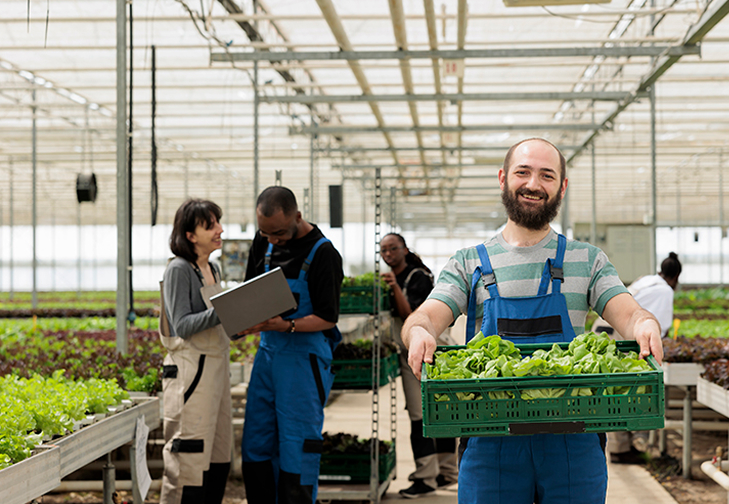

Rural areas and agriculture are facing major economic, social and environmental challenges regarding climate change, loss of biodiversity and water supply. Consequently, there is a need for new or improved innovative business and production models in rural areas that tackle these challenges and have an impact on sustainability.
NEXRUR´s main objective is to investigate the innovation dynamics and strategies for change in rural areas, through international cooperation between the EU and China, enabling farmers and their communities to develop, select and upscale new or improved sustainable business models and monitor their economic, social and environmental impact on rural resilience.
“With NEXRUR, we share knowledge and best practices between Europe and China to support farmers and communities in rural areas co-design and co-create sustainable business models through a network of established community-led cases. By combining knowledge, practice, and international cooperation, we aim to strengthen rural resilience, generating more jobs, better services, improved access to healthy food, and greater value for agriculture.”– Philipp Grundmann, NEXRUR Project Coordinator from ATB
NEXRUR will generate new knowledge on community-led agricultural business models, bringing together conceptual with practical research, contributing to the generation of a knowledge base and facilitating co-design and co-innovation in a network of 22 diverse community cases (15 in the EU and 7 in China) and 7 selected start-up cases (5 in the EU and 2 in China).
Besides, NEXRUR will verify the social and environmental performance of community-led agricultural businesses in different contexts, agri-food value chains, pedoclimatic zones and socioeconomic and environmental conditions in the EU and China.
NEXRUR´s results will showcase a summary of tested and improved pathways, strategies, tools and policy recommendations for the successful community-led businesses model development. Both the new knowledge generated and a monitoring framework for agricultural businesses, will be widely disseminated in the EU, China and beyond, inspiring the uptake of innovative production activities able to increase the prosperity of farmers.
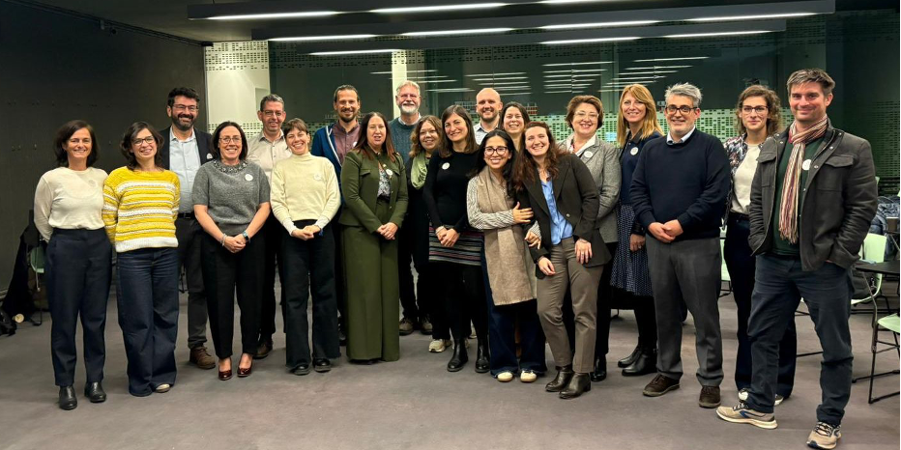
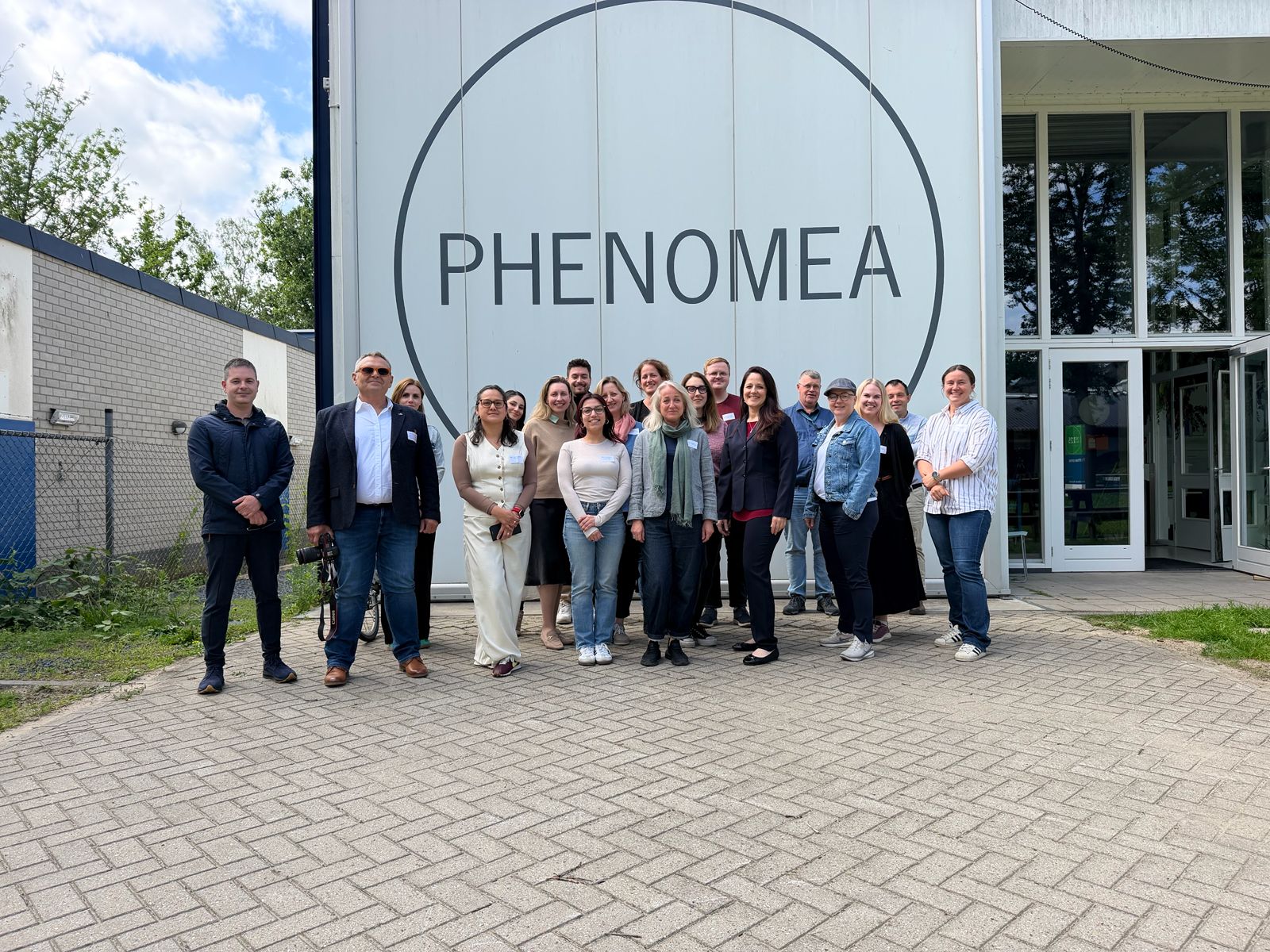
NEXRUR officially started activities on 1 October 2025 and will run for 4 years. The project consortium, coordinated by Leibniz-Institut für Agrartechnik und Bioökonomie e.V. (ATB, Germany), connects 21 partners from Europe: Humboldt-Universität zu Berlin (UBER, Germany), Stichting Wageningen Research (WR, Netherlands), Universidad de Burgos (UBU, Spain), Collaborating Centre on Sustainable Consumption and Production gGmbH (CSCP, Germany), RISE Research Institutes of Sweden AB (RISE, Sweden), Sveriges lantbruksuniversitet (SLU, Sweden), Greenovate! Europe (G!E, Belgium), Bundesanstalt für Agrarwirtschaft und Bergbauernfragen (BAB, Germany), Fundación Centro Europeo de Empresas e Innovación de Murcia (CEEIM, Spain), Cluster Viooikonomias kai Perivallontos Dytikis Makedonias (CLUBE, Greece), Fundación Universitaria San Antonio (UCAM, Spain), Association Européenne Leader pour le Développement Rural (ELARD, Belgium), GreenFlex (France), Magyar Akvakultúra Technológiai és Innovációs Platform Egyesület (HUNATiP, Hungary), Zabala Innovation Consulting S.A. (Spain), Coöperatie Stadslandbouw Oosterwold U.A. (Netherlands), Verein für Landschaftspflege Potsdamer Kulturlandschaft e.V. (LPVPo, Germany), Landschaftspflegeverband Prignitz Ruppiner Land e.V. (LPVPR, Germany), Asociación de Productores de Ganado Criado a Pasto (DeYerba, Spain).
The 9 partners from China are Institute of Urban Environment, Chinese Academy of Sciences; Ningbo University; Zhejiang Gongshang University; Research Center for Eco-Environmental Sciences, Chinese Academy of Sciences (RCEES); Institute of Agricultural Economics and Development, Chinese Academy of Agricultural Sciences (CAAS); Zhejiang University; Yangzhou University; Zhejiang Academy of Agricultural Sciences; Shandong Academy of Agricultural Sciences.
You can keep up with project progress on the LinkedIn page and on the project website.